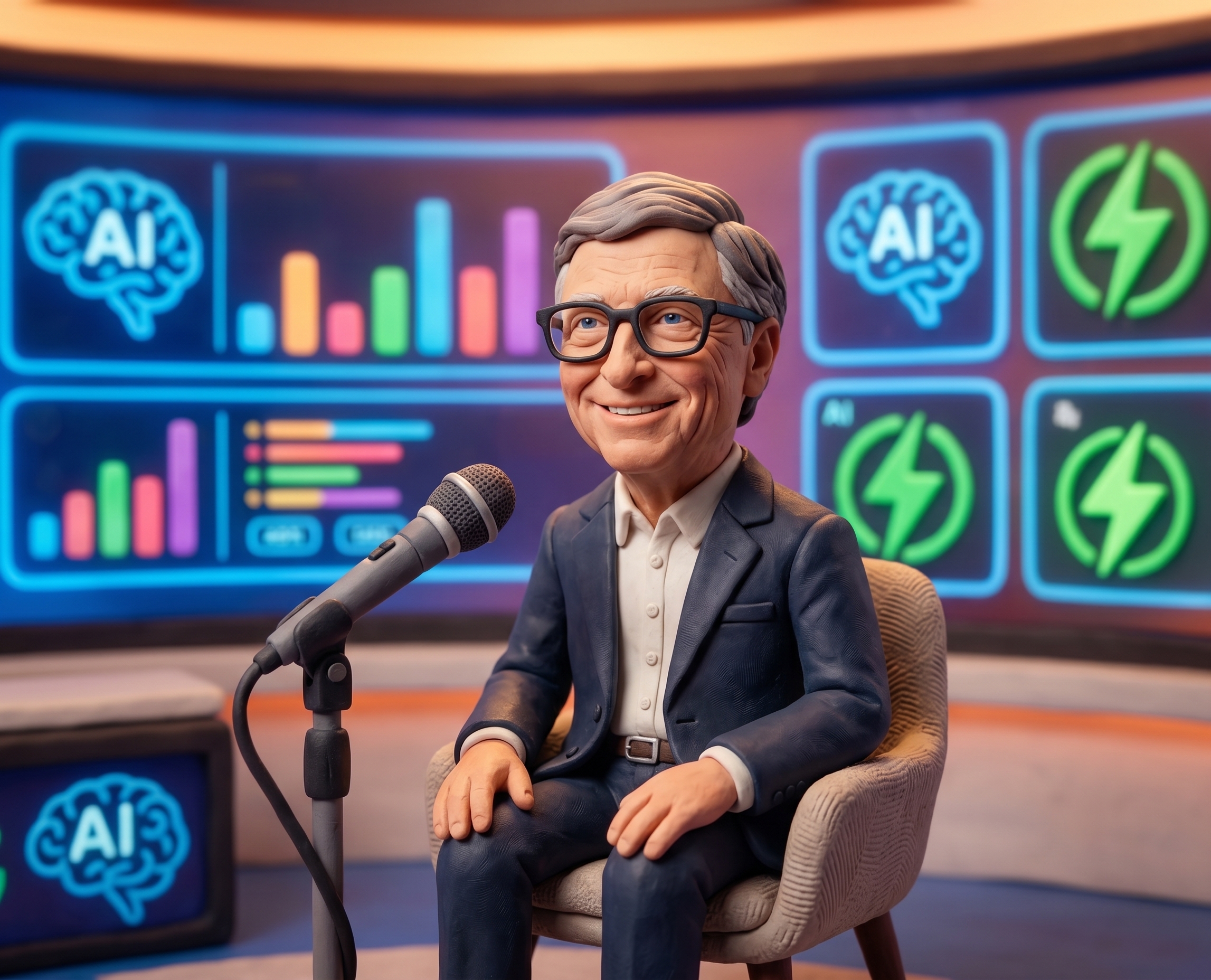
White-Collar Fears, Green Energy, and Why Corporate Self-Regulation Isn't Enough
Analyzing Bill Gates's recent interview on NBC: From white-collar job shifts and medical breakthroughs to energy crises and the urgent need for supranational oversight.
Even if you have spent your entire life completely disconnected from the tech world, there is virtually zero chance you have not heard the name Bill Gates. From building Microsoft into a global titan to his highly controversial public profile, he remains a deeply polarizing figure. To be completely frank, for certain well-known reasons, I am personally no fan of his. However, when someone with his historical weight in tech speaks about the future of artificial intelligence, it is worth looking past the individual to critically analyze the actual ideas being put forward. In a recent interview on NBC’s Meet the Press with Kristen Welker, Gates shared his latest thoughts on where AI is heading, tackling the immediate societal, economic, and environmental trade-offs of this ongoing revolution.
The White-Collar Shift and the Adaptability Race
Gates emphasized that AI is moving far beyond basic automation and diving straight into knowledge work, reshaping administrative roles, software development, and executive planning. While he acknowledged that short-term employment friction and economic anxiety are inevitable, he remains optimistic about long-term productivity gains for society.
I am not consumed by doomist panic about AI taking away every single job overnight, but my genuine concern lies in the very real threat of getting left behind in this technological race. We are already witnessing this reality across various sectors and countries through major corporate layoffs and restructuring. Adaptability is no longer just a trendy concept, it is a fundamental requirement for survival in the modern workforce. Rather than ignoring the trend, I actively try to experiment with emerging AI tools. Even though personal AI subscriptions can feel somewhat pricey, incorporating them into daily workflows in small ways helps immensely. Above all, committing to staying informed every single day and keeping up with rapid developments is our best insurance against becoming obsolete.
Democratizing Healthcare and Education
During the interview, Gates highlighted AI’s massive potential to bridge global inequality. By deploying personalized AI tutors and instant diagnostic tools, regions lacking qualified doctors and teachers could gain access to top-tier expertise at scale.
I sincerely hope this vision becomes reality. The potential of artificial intelligence in medicine is, in my view, its most important contribution to humanity. Diseases that were absolute death sentences just 50 years ago are now treated with routine medications, and AI could accelerate medical discoveries at an unprecedented rate. Quality healthcare and education should never be luxury privileges, they are fundamental rights that must be easily accessible to everyone across the globe.
Energy Infrastructure and the Need for Supranational Oversight
The elephant in the room regarding AI infrastructure is its insatiable appetite for power. AI data centers require astronomical amounts of electricity, which creates an immediate strain on energy grids. Gates argued that AI will ultimately solve the energy crisis it created by accelerating breakthroughs in nuclear, fusion, and renewable energy technologies.
Building massive data center after data center comes with an immediate environmental footprint that we cannot afford to ignore. While AI might eventually discover cleaner energy solutions, we must avoid causing irreversible damage to our planet in the process. Leaving environmental accountability solely in the hands of profit-driven tech corporations is a dangerous risk. This level of global impact requires supranational control mechanisms, meaning independent international bodies that strictly monitor and regulate AI infrastructure rather than relying on corporate goodwill.
Pragmatic Governance Over Corporate Discretion
Addressing concerns around deepfakes and election integrity, Gates cautioned against falling into panic or demanding artificial pauses on technological progress. Instead, he advocated for pragmatic governance, smart rules, and preparing society for the shift.
Panicking or attempting to freeze development is unrealistic and counterproductive, but responsibility cannot be left to corporate discretion alone. Almost every tech company today promotes a different narrative regarding responsible AI, yet expecting companies to self-regulate when billions of dollars in profit are on the line simply does not work. Strict, external oversight is essential to keep these systems accountable and safe.
Looking Ahead
As we navigate this rapid transition, Bill Gates’s insights remind us that AI is neither an overnight apocalyptic disaster nor an effortless silver bullet, it is a powerful tool shaped by human decisions. The core challenge of our decade is not just building more capable algorithms, but establishing the ethical frameworks, energy guidelines, and personal habits needed to handle them wisely.
What are your thoughts on Bill Gates’s perspective? Are you more worried about job displacement, or excited about AI-driven medical breakthroughs? Let’s discuss in the comments below!